
LED face mask eye safety has become a growing topic of concern as LED light masks gain popularity in at-home skincare routines. While these devices promise clearer, younger-looking skin through light therapy, many users are starting to ask an important question: Are LED light masks dangerous for your eyes?
To find the real answer, we need to look beyond marketing claims and focus on what truly matters—how LED light reaches the eyes, and whether the mask design adequately prevents unintended exposure.
Why LED Face Mask Eye Safety Is Being Questioned
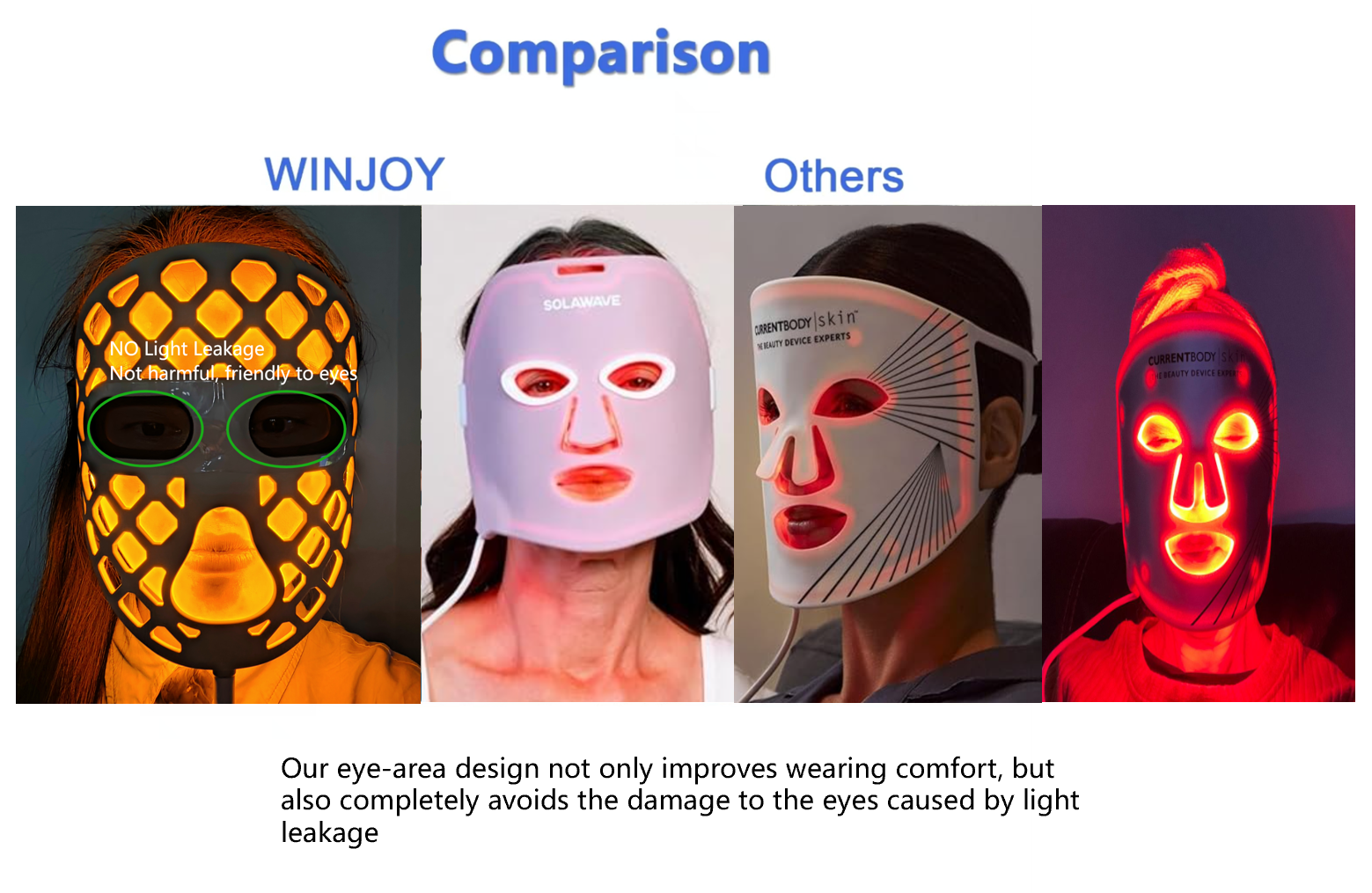
Most discussions around LED light masks emphasize wavelengths, such as red light, blue light, or near-infrared. Red light is often described as “safe” or “low risk,” while blue light receives more scrutiny due to its higher energy level.
However, when it comes to LED face mask eye safety, wavelength alone does not tell the full story.
Authoritative beauty and health publications point out two important facts:
There is limited long-term data on repeated eye exposure from consumer LED masks.
Safety often assumes perfect usage—eyes closed, correct positioning, and sometimes external eye protection.
In real-life use, those conditions are not always guaranteed.
The Overlooked Risk: Light Leakage Caused by Poor Mask Design
Eye Exposure Is Often a Structural Problem
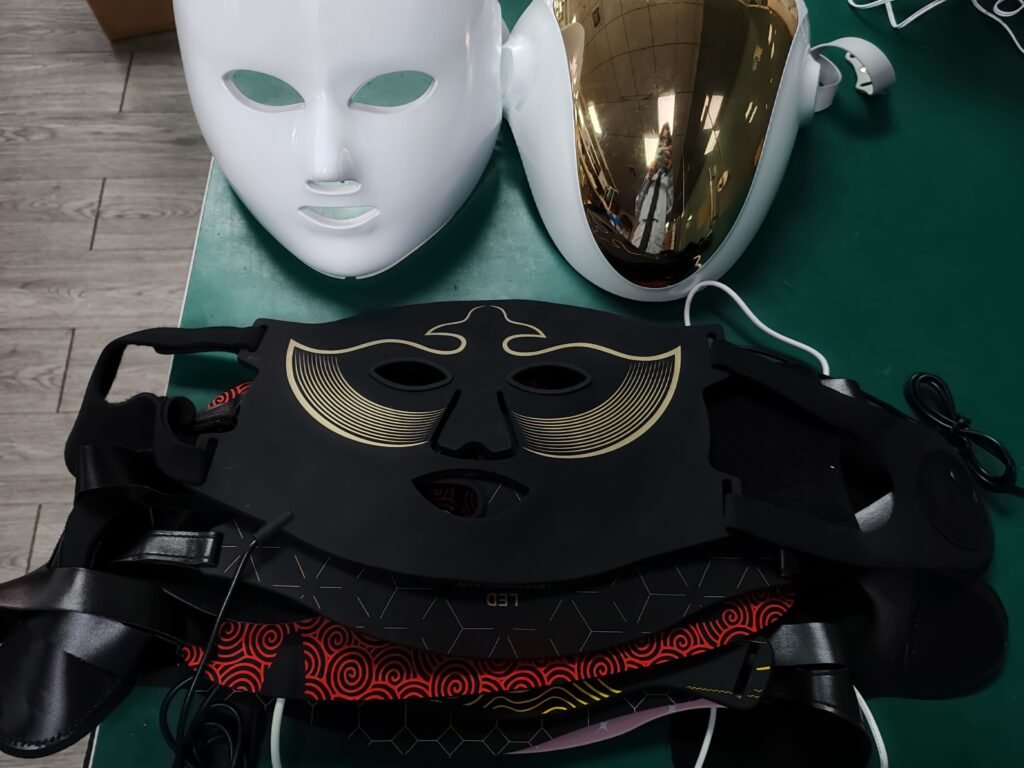
Many LED face masks on the market use simple eye cutouts or shallow openings. While these designs may look convenient, they create a critical flaw: light leakage.
Even with eyes closed, LED light can:
Enter the eye area through gaps
Reflect internally within the mask
Penetrate thin eyelid skin over time
This repeated exposure raises legitimate LED face mask eye safety concerns—not because LED light is inherently dangerous, but because it is uncontrolled and unnecessary.
Why User Instructions Are Not Enough
Some brands suggest:
“Just close your eyes”
“Wear protective goggles”
“Avoid looking directly at the light”
But from a safety-design perspective, this is a red flag.
If a device truly prioritizes LED face mask eye safety, eye protection should be built into the structure, not left to user behavior.
Blue Light and Mixed-Spectrum Masks Increase Eye Safety Concerns
Many modern LED masks combine multiple wavelengths, including blue light. While effective for acne treatment, blue light carries higher photochemical energy.
When eye areas are not fully shielded:
Mixed-spectrum exposure increases cumulative eye stress
Accidental direct or indirect exposure becomes more likely
This makes structural eye shielding essential, especially for frequent users.
LED Face Mask Eye Safety Depends on Design—Not Just Light
True LED face mask eye safety is determined by how well the mask:
Blocks light from entering the eye area
Maintains full coverage during movement
Eliminates reliance on perfect user positioning
Unfortunately, most first-generation LED masks were not designed with this level of eye protection in mind.
How 4D Eye Shielding Redefines LED Face Mask Eye Safety
What Makes 4D Eye Shielding Different?

Our first- and second-generation LED face masks were engineered specifically to solve the eye exposure problem.
The 4D eye shield structure:
Fully contours around the orbital bone
Creates a complete light-blocking chamber
Prevents direct and indirect light leakage
This ensures zero LED exposure to the eyes during treatment.
Comfort Without Compromise
Unlike bulky goggles or rigid inserts, the 4D structure is:
Ergonomically shaped
Pressure-free around sensitive eye areas
Designed for a truly “no-sensation” wearing experience
This means LED face mask eye safety is achieved without sacrificing comfort.
Traditional LED Masks vs 4D Eye Shield Design
Feature | Traditional LED Masks | 4D Eye Shield Mask
Eye opening | Flat / open cutout | Fully enclosed 4D structure
Light leakage | Possible | Eliminated
Eye safety | User-dependent | Structurally guaranteed
Comfort | Often compromised | Ergonomic & pressure-free
Long-term confidence | Uncertain | High
Final Verdict: Are LED Light Masks Dangerous for Your Eyes?
So, are LED light masks dangerous for your eyes?
The answer is not a simple yes or no.
LED light itself—especially red light—is generally considered low risk when used correctly. However, LED face mask eye safety ultimately depends on design.
Masks that allow light leakage around the eyes introduce unnecessary exposure. Masks with built-in structural eye protection, such as 4D eye shielding, eliminate that risk at its source.
In the future of at-home beauty devices, eye safety will no longer be optional—it will be expected.
Learn more about WINJOY and WINJOY breathable led face masks